Key Insight
The feeling of being trapped by the Eight of Swords usually points to self-imposed mental limitations rather than external reality. You are likely bound by limiting beliefs, fears, or narratives you have accepted about the relationship. The key is identifying which constraints are actual facts versus which are stories you are telling yourself.
Definition
This card signifies a temporary feeling of powerlessness, suggesting that the perceived limitations are often mental constructs rather than absolute physical...
Key Takeaways
- Examine the blindfold: Identify the perspective or information you are actively avoiding.
- Test the bonds: Determine which perceived obligations are actually flexible or negotiable.
- Challenge the narrative: Separate immutable facts from the painful thoughts you are cycling through.
- Seek outside views: Consult trusted sources for an objective perspective on your situation.
Scope And Limits
- This reading does not predict the relationship's outcome.
- It cannot remove external, undeniable logistical barriers.
- It requires your active participation in questioning your own beliefs.
Want your personalized reading?
Experience our AI divination system combining ancient wisdom with modern insights.
The Eight of Swords in a relationship reading points to a feeling of being trapped, but the card's core message is that the blindfold is the first thing to remove—the perceived constraints are often mental before they are real. When you search for eight of swords tarot why do i feel stuck and trapped in my relationship, you're likely looking for more than a definition; you're seeking a way to understand the specific nature of the cage you feel you're in. This card rarely depicts a literal prison. Instead, it highlights a state of mind where you feel powerless, bound by circumstances, beliefs, or fears that you may have partially constructed or accepted without question.
What the Eight of Swords Reveals About Your Stuck Feeling
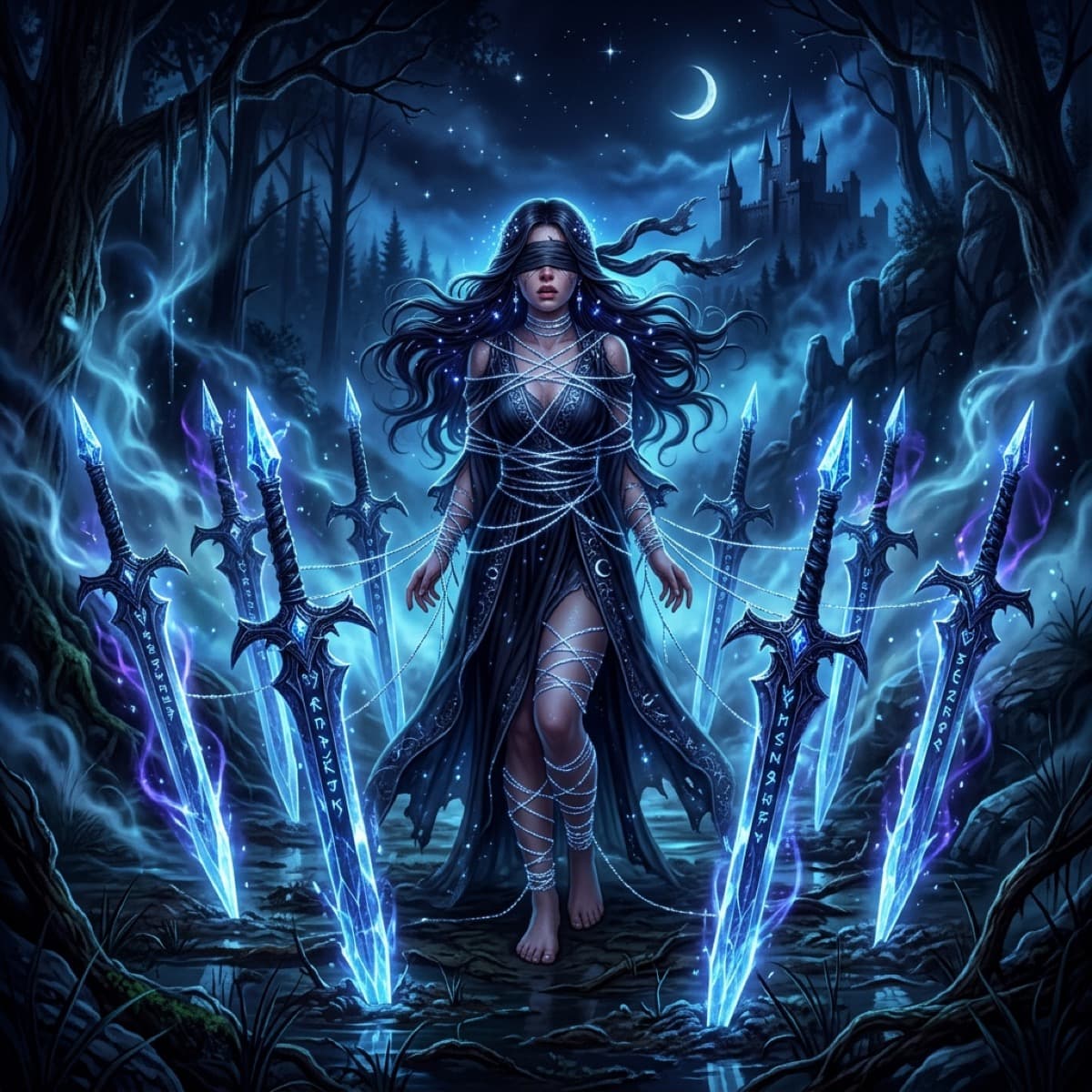
In the Rider-Waite-Smith image, a bound and blindfolded woman stands surrounded by swords. The ground is muddy, the sky is grey, yet the ropes are loose and the path behind her is open. This is the crucial paradox of the card. The feeling of being "stuck and trapped" is overwhelmingly real to you, but the visual language suggests the bindings are not as secure as they seem, and the blindness is self-imposed or circumstantial. The card asks: what story are you telling yourself that makes this situation feel inescapable? Is it a fear of being alone, financial dependency, concern for children, or a deep-seated belief that "this is just how relationships are"? The Eight of Swords names this pressure without blaming you for it; it simply states that this is the current mental and emotional landscape.
Distinguishing Between Real and Perceived Constraints
Try It Now — Free Reading
✦ Free · Private · Instant Results
A practical reading of this card involves sorting the actual barriers from the imagined ones. The swords represent the sharp, painful thoughts—the "what ifs," the criticisms, the ultimatums you've heard or given yourself. The blindfold represents what you are refusing to see, perhaps your own agency, resources, or alternatives. To move from feeling trapped to finding a next step, you must separate the two. The following table outlines common interpretations:
| Element in the Card | What It Often Represents | A Practical Question to Ask |
|---|---|---|
| The Blindfold | Self-imposed limitations, refusal to see options, accepting a narrow narrative. | "What is one piece of information or perspective I am actively avoiding?" |
| The Loose Bonds | Perceived obligations or constraints that are more flexible than they feel (e.g., roles, routines, expectations). | "If I acted as if I were 10% freer, what small action would I take?" |
| The Surrounding Swords | External pressures, harsh words, real logistical challenges, or the painful thoughts cycling in your mind. | "Which of these 'swords' is an immutable fact, and which is a fear I can challenge?" |
| The Open Background | The potential for movement, the existence of a path out that is currently unseen or deemed too difficult. | "Who or what represents a safe 'outside' perspective I could consult?" |
The Next Practical Check: Removing the Blindfold
The card does not tell you to dramatically leave or blindly stay. Its imperative is more subtle: begin by removing the blindfold. This means consciously seeking one new viewpoint. In a real-life scenario, this might look like: You're lying awake at night, cycling through the same hopeless thoughts about your partnership. The Eight of Swords appears. Instead of trying to solve the entire problem, you commit to one act of "sight." The next day, you talk to a trusted friend without asking for advice, simply describing the situation aloud as if to a neutral observer. Or, you journal the constraints you feel, then label each as "Fact," "Fear," or "Assumption." Often, the simple act of articulating the trap to an outside ear or page reveals where the bonds are loosest and where your own narrative has tightened them.
What the Eight of Swords Cannot Decide For You
It is vital to understand the card's limits. The Eight of Swords clarifies the "why" behind the feeling of entrapment; it does not deliver a verdict on the relationship's future. It cannot tell you if your partner will change, if love is gone, or if you should leave. Its gift is diagnostic, not predictive. It highlights the mental and emotional conditions of feeling stuck. Acting on its message means addressing those conditions first—questioning the blindfold, testing the bonds—before making any major decision. This card warns against making permanent choices from a place of perceived powerlessness.
Frequently Asked Questions
Q: Why does the Eight of Swords feel so accurate when I'm stuck?
A: It resonates because it visually and symbolically mirrors the internal experience of paralysis. The bound figure isn't fighting against tangible chains but is immobilized by a field of threatening ideas and a lack of vision. When you're in that state, seeing it reflected in a card validates the intensity of your feeling, which is the first step toward examining it objectively rather than being consumed by it.
Q: What should I do before acting on this interpretation?
A: Before taking any major action, use the card's insight to conduct a "constraint test." Write down the three biggest reasons you feel trapped. For each, ask: Is this 100% true, or is it my interpretation? Is this within my control to change, even slightly? What would I do if this one constraint were lifted? This process turns the card's abstract message into a concrete self-inquiry, ensuring any subsequent action comes from clearer sight, not reactive despair.
Q: Can this card indicate external manipulation or abuse?
A: While the card primarily addresses internalized constraints, the surrounding swords can absolutely represent real external pressure, coercive control, or verbal abuse. In such contexts, the "blindfold" may be induced by gaslighting or isolation. The card's message remains: the feeling of being trapped is real, and the first step is to seek a perspective outside the enclosed system (like a domestic violence hotline or counselor) to help assess the true nature of the bonds.
Q: If the bonds are loose, why don't I just walk away?
A: The psychological experience of entanglement is powerful. The "muddy ground" in the card speaks to emotional inertia, fatigue, and the fear of the unknown. The loose bonds suggest you could move, but the combination of blindfold (not seeing how) and swords (fear of pain) creates a powerful illusion of no exit. The work is to address the fear and the blindness incrementally, not to expect willpower alone to overcome the entire scenario at once.
Try It Now — Free Reading
✦ Free · Private · Instant Results