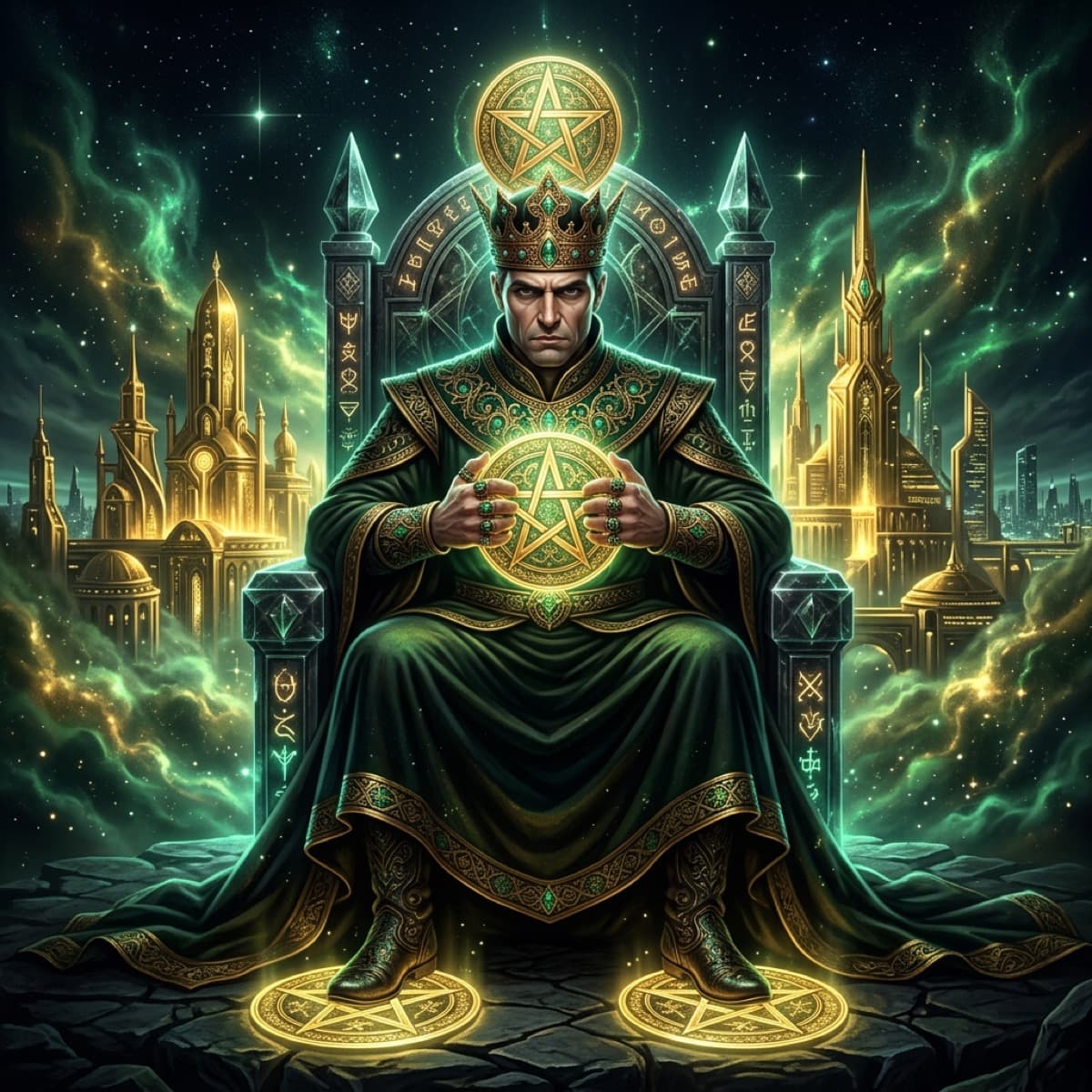
Key Insight
Historical records confirm tarot originated in 15th-century Italy as a card game, with no evidence of divinatory use before the 18th century. Its 'accuracy' is not historical but symbolic. Occultists later imbued the cards with archetypal meanings that accurately reflect universal human experiences—love, loss, ambition, and transformation—across cultures and eras. The power of tarot lies not in predicting specific events but in providing a profound mirror for psychological insight and personal narrative, making it a real tool for self-reflection despite its invented mystical history.
Want your personalized reading?
Experience our AI divination system combining ancient wisdom with modern insights.
Executive Summary: Tarot's documented history begins in 15th-century Italy as a card game, not a divination tool. Occultists in the 18th century retroactively assigned mystical meanings, creating the "history" we know. Its "accuracy" lies not in ancient prophecy, but in the enduring power of its archetypal symbols to mirror the human experience across time.
The Uncomfortable Historical Record vs. The Symbolic Truth
After over a decade of professional study, I must state the historical facts bluntly: the tarot deck as a tool of psychic divination is a relatively modern invention. The earliest known decks, like the luxurious Visconti-Sforza, were created for nobility's entertainment. The "secrets of the ancients" narrative was constructed centuries later. So, is it fake? Not exactly. The real magic happened when occultists like Antoine Court de Gébelin and the Hermetic Order of the Golden Dawn looked at these playing cards and saw a reflection of universal human truths. They weren't discovering a lost history; they were creating a symbolic language so profound it feels ancient. This is where the "accuracy" debate shifts. It's not about predicting stock markets; it's about the deck's uncanny ability to accurately depict timeless emotional and psychological states.
Want a personalized perspective? Get your free tarot reading to uncover deeper guidance.
How "Fake" History Created a Real Tool for Insight
Try It Now — Free Reading
✦ 100% Free · Private · Instant Results
The historical inaccuracy is, ironically, what makes tarot so powerful. Freed from a single dogmatic tradition, it became a flexible mirror for the soul. In my practice, I've seen the Three of Swords depict heartbreak for a medieval duchess and a modern client going through a divorce with equal precision. The history isn't in the parchment; it's in the collective human experience the symbols capture. This connects deeply to the Collective Unconscious Theory, suggesting the cards tap into a shared psychic heritage. When a skeptic asks about coincidence or supernatural forces, I point to this symbolic consistency across cultures and eras as evidence of something real at work.
| The "Documented" History | The "Experiential" Accuracy |
|---|---|
| Originated 1430s Italy as a card game called "trionfi." | Archetypes (Fool, Emperor, Death) resonate across centuries, accurately depicting life stages. |
| No evidence of divinatory use before the 1700s. | The narrative structure (Fool's Journey) accurately maps universal hero journeys and psychological development. |
| Modern imagery (Rider-Waite-Smith, 1909) is a recent artistic interpretation. | Symbolic language (water for emotion, mountains for obstacles) provides accurate, intuitive metaphors for clients' situations. |
The greatest historical accuracy of the tarot is its perfect record of the human heart. The dates are wrong, but the stories are eternally true.
Rapid FAQ: Tarot's Historical Roots
Q: If tarot isn't ancient, how can it be accurate?
A: Its accuracy stems from symbolic, not historical, fidelity. It accurately models universal psychological patterns, not past events. For a deeper dive into how the mind creates meaning, see our piece on the role of confirmation bias.
Q: Does this mean all readers are frauds?
A> Absolutely not. A ethical reader understands this history and uses the symbols as a catalyst for introspection, not as a claim to supernatural antiquity. The difference between a genuine guide and a charlatan often comes down to understanding techniques like cold reading versus authentic symbolic practice.
Try It Now — Free Reading
✦ 100% Free · Private · Instant Results