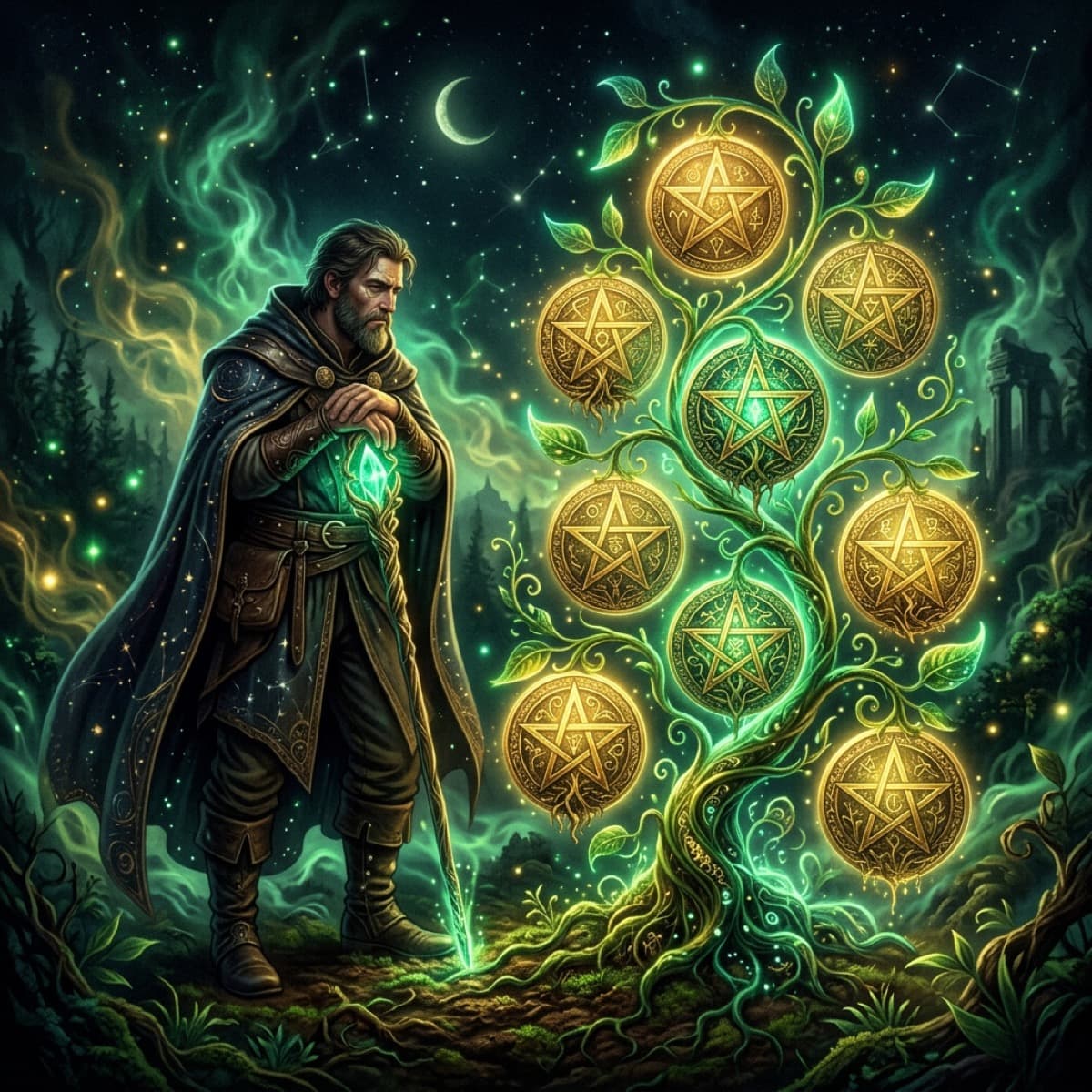
Key Insight
Tarot is neither a formal religion nor simple entertainment. It functions primarily as a symbolic system and psychological tool—a 'technology of introspection' that maps universal human experiences. While some religious traditions incorporate tarot for divine communication, its core power lies in reflecting the subconscious mind, similar to Jungian active imagination. It operates on principles of archetype, synchronicity, and symbolic randomization to clarify internal conflicts and illuminate present dynamics, empowering individuals through greater self-awareness rather than predicting a fixed future.
Want your personalized reading?
Experience our AI divination system combining ancient wisdom with modern insights.
Executive Summary: Tarot is neither a religion nor mere entertainment. It is a symbolic system and psychological tool, a "technology of introspection" that maps the human experience. While some incorporate it into religious practice, its power lies in its ability to mirror the subconscious, making it a profound secular tool for insight, akin to Jungian active imagination.
The Core Identity of Tarot: A Tool, Not a Dogma
In my decade of guiding clients through the archetypes, I've found the most profound confusion lies here. People seek a label. Let's be clear: Tarot has no central deity, no required doctrine, and no promised salvation. Its reality isn't in supernatural forces, but in its uncanny psychological resonance. A recent client, paralyzed by a career choice, drew the Two of Paths (Traditionally, Two of Swords). The blindfolded figure didn't "predict" her outcome; it mirrored her conscious avoidance. The breakthrough was entirely her own. This is the "real" magic.
To crystallize the distinction, consider this framework:
| Tarot as a Religious Component | Tarot as a Psychological Tool |
|---|---|
| Used within Wicca, Paganism, or eclectic spiritual paths as a divine communication channel. | Used as a mirror for the subconscious, leveraging archetypes (The Hero, The Wise Old Man) to clarify internal conflicts. |
| The cards are believed to be influenced by deities, guides, or specific energies the reader invokes. | The cards operate on synchronicity (meaningful coincidence) and symbolic randomization, a concept even scientists can explore through methods like testing probability. |
| Readings may seek prophetic guidance on "God's will" or cosmic plan. | Readings focus on illuminating present dynamics, hidden biases, and potential outcomes based on current trajectories. |
The cards don't tell your future; they tell you about yourself with such clarity that your future becomes clearer. That's not entertainment—it's empowerment.
Navigating the Spectrum: From Entertainment to Enlightenment
Try It Now — Free Reading
✦ 100% Free · Private · Instant Results
Calling tarot "just entertainment" dismisses its transformative potential, yet the entertainment space is where many first connect. The key is intent. A party trick reading is lighthearted fun. A deep, focused session is soul-work. The system's validity isn't diminished by its playful use, just as a chess set can be both a child's game and a grandmaster's battleground.
This is why discerning intent is critical, both in your own practice and in choosing a guide. I always advise seekers to learn how to spot the difference between a reader fostering dependency and one fostering self-awareness. The latter uses the cards as a launchpad for your own wisdom.
Feeling uncertain about your next step? Consult the tarot for free and find the clarity you need today.
Modern applications prove its utility beyond the mystical. I've developed methods for sleep-deprived parents to make clearer choices and for those navigating the emotional fallout one month after a layoff. These are pragmatic uses for a symbolic tool.
FAQ: Your Pressing Questions Answered
Do I need to be spiritual to use tarot?
Absolutely not. Approach it as a focused brainstorming session. The symbols prompt new neural connections, helping you see problems from angles your logical mind may have missed. Many programmers and analytical thinkers find immense value in this structured, symbolic "debugging" process.
Is using free online or app-based tarot less valid?
Validity comes from the depth of your inquiry, not the medium. A sincere question posed to a digital tool can yield profound insight. The key is to move beyond the instant answer and sit with the symbolism it presents.
Can tarot become a harmful obsession?
Yes, if used as an external crutch to avoid personal responsibility. A healthy practice asks, "What does this reveal about my situation?" An unhealthy one demands, "What will happen to me?" Setting clear intentions and time boundaries is essential for a balanced practice.
Try It Now — Free Reading
✦ 100% Free · Private · Instant Results