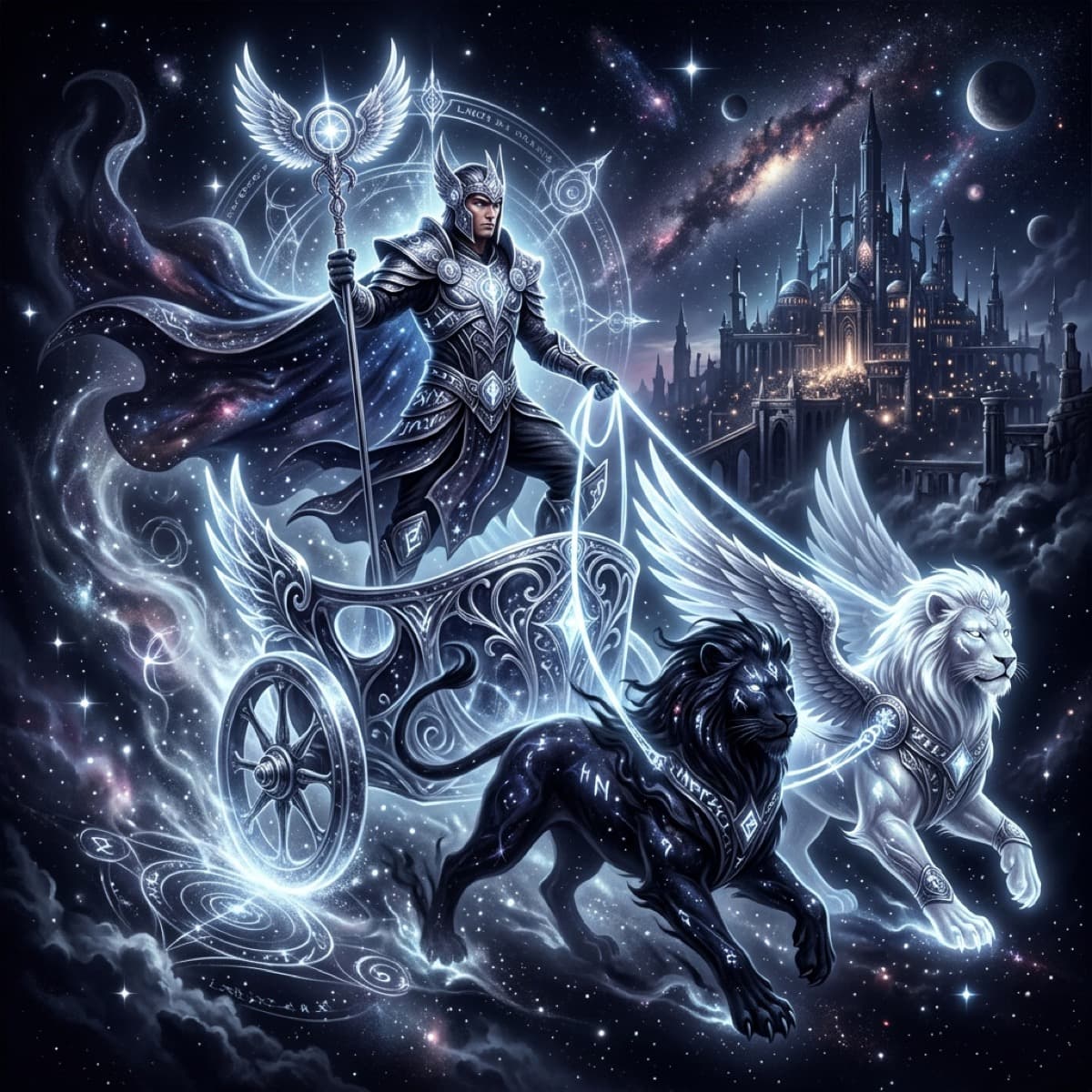
Key Insight
Tarot is not mystical divination but a structured system for pattern recognition and scenario modeling, making it highly compatible with an engineering mindset. It functions as a 78-card algorithm for mapping complex variables, offering logical validation through its consistent symbolic framework. The suits act as data types (Swords for logic, Cups for emotions), numerology as state, and court cards as archetypal agents. A reading is akin to running a simulation, showing the probable consequences of a current trajectory by highlighting emotional or situational blind spots that pure logic might miss.
Want your personalized reading?
Experience our AI divination system combining ancient wisdom with modern insights.
Tarot for Engineers Who Need Logical Validation
Executive Summary: Tarot is not mystical divination but a structured system for pattern recognition and scenario modeling, making it highly compatible with an engineering mindset. It functions as a tool for accessing non-conscious data and exploring probabilistic outcomes, offering logical validation through its consistent symbolic framework and cause-effect relationships.
In my decade of practice, I've found that engineers and systems thinkers are some of my most insightful clients. They don't seek magic; they seek a framework. The moment of breakthrough often comes when I reframe the deck not as a fortune-telling device, but as a 78-card algorithm for mapping complex emotional and situational variables. A recent client, a software architect struggling with a career pivot, showed me how the cards mirrored his own decision-tree analysis, highlighting emotional blind spots his pure logic had omitted.
The Logical Architecture of a Tarot Reading
Think of a tarot spread as a function. You input a question (the query), the spread defines the data structure (positions representing past, present, future, challenges, advice), and the cards returned are the output—symbolic data points to be interpreted. The "logic" is found in the immutable relationships within the system:
- The Suits as Data Types: Swords (logic, conflict), Wands (energy, projects), Cups (emotions, connections), Pentacles (resources, physical results).
- Numerology as State: Aces (initiation), Fours (stability), Tens (completion).
This creates a verifiable internal logic. Drawing the Three of Swords (heartbreak, logical pain) followed by the Ace of Cups (new emotional beginning) isn't "prediction"; it's a model showing a probable sequence: acknowledged pain often precedes emotional renewal. This is no different than running a simulation. For those who need empirical bridges, I often point them to explorations like Is Tarot Real? Quantum Physics Offers Surprising Explanations, which examines the observer effect and non-locality.
| Engineering Challenge | Corresponding Tarot Mechanism |
|---|---|
| Unclear System Requirements | Card 1: "The Current State" (e.g., The Magician - resources available) |
| Identifying Bottlenecks & Failure Points | Card 2: "The Challenge" (e.g., The Devil - unconscious constraints) |
| Modeling Probable Outcomes | Card 3: "The Probable Outcome" (e.g., The World - integration & success) |
| Stress-testing a Solution | A follow-up spread like an Emergency Tarot Spread for Panic Attacks to test resilience. |
"The cards don't tell you what will happen. They show you the logical consequences of your current trajectory, given all known variables—including the ones your conscious mind is ignoring." – From my client notes.
My proprietary method for analytical minds involves a "debugging spread." We treat a problem like a bug in a system. Is it a logic error (Swords reversed)? A resource leak (Pentacles)? An infinite loop of anxiety (repeated Cups cards)? This approach provides the logical validation engineers crave: a consistent, repeatable method for introspection. It's particularly useful for Tarot Reading for Atheists or anyone who rejects supernatural claims.
Ready to explore this for yourself? Try a free tarot reading now and see what the universe reveals about your situation. Approach it as a data-gathering mission. What patterns emerge?
FAQ: Tarot for the Analytically Minded
Isn't tarot just confirmation bias?
It can be, if used passively. The key is adversarial interpretation. Actively argue *against* the card's most obvious meaning. If you draw The Sun (success), ask: "What are the potential overheating risks?" This counter-bias is your logical safeguard.
How can shuffling produce anything relevant?
Consider the shuffle as a random number generator seeding a complex, symbolic equation. Your mind—trained in pattern recognition—then solves for X. The relevance isn't in the random draw, but in the unique synaptic connections *you* make during interpretation. It's a mirror for your own database of knowledge and intuition.
Can tarot help with concrete, technical decisions?
Absolutely, but indirectly. It won't debug your code. It will highlight that your creative block (The Moon) might stem from a lack of rest, not incompetence, or that your project's stagnation (Four of Swords) calls for a strategic pause, not more brute force. It models the human factors in the system.
Try It Now — Free Reading
✦ Free · Private · Instant Results