Key Insight
By 2026, tarot translation for non-English markets will prioritize cultural resonance over literal word-for-word accuracy. The focus must shift from dictionary definitions to the underlying emotional archetypes and symbolism. Success relies on adapting the card's feeling to the local community's spiritual context, ensuring emotional fidelity in readings.
Definition
Tarot translation trends involve adapting symbolic meanings to resonate deeply within a specific culture, rather than merely translating the surface language.
Key Takeaways
- Focus must shift from literal words to underlying emotional archetypes.
- Cultural transposition is key; resonance matters more than strict accuracy.
- Local spiritual authorities must validate the adapted symbolic meanings.
- Prioritize preserving subtle emotional gradients across different languages.
Scope And Limits
- The translation cannot guarantee a single, universal meaning for all cultures.
- The reader's cultural framework must guide the translation process.
- It cannot replace the need for local spiritual validation.
Want your personalized reading?
Experience our AI divination system combining ancient wisdom with modern insights.
The primary trend in tarot translation for non-English markets by 2026 will be a move away from literal, word-for-word translation toward culturally resonant, contextually adapted symbolism.
What I would look at first in this discussion is the shift in focus from the card's literal meaning to the underlying emotional archetype it represents. For global markets, the power of the imagery—the Rider-Waite-Smith archetypes—will prove more valuable than any single language's dictionary definition.
In analyzing these trends, we must distinguish between surface-level linguistic translation and deep cultural transposition. A simple translation of "Justice" might fail if the target culture interprets justice through a lens of communal obligation rather than individual cosmic balance. The goal is resonance, not accuracy.
The Shift from Lexicon to Archetype in Global Readings
When we speak of tarot translation for emerging or non-English markets, the challenge is that the cards are not just pictures with words; they are complex symbolic narratives. A direct translation often strips away the necessary cultural context that gives the card its weight in a reading.
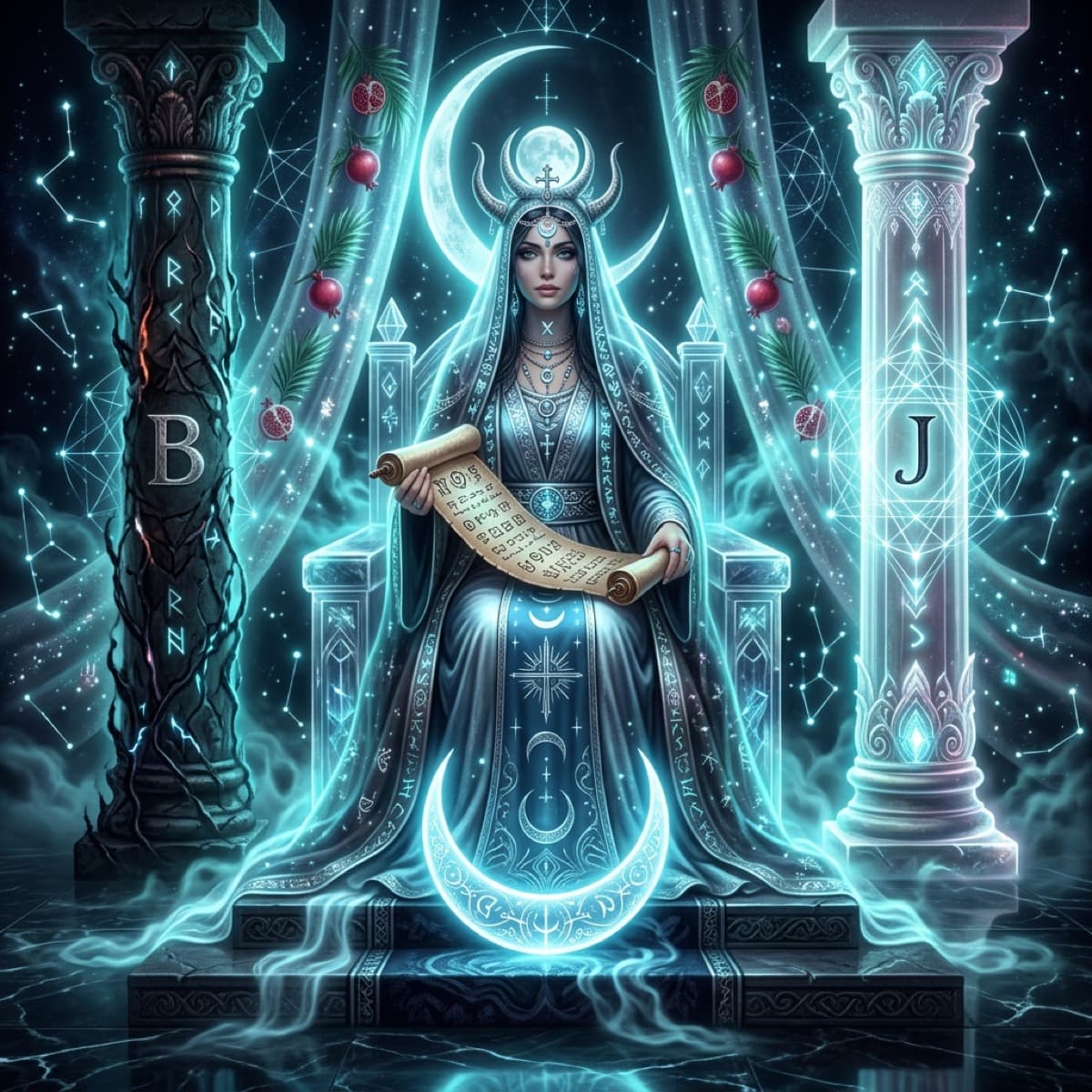
I would focus heavily on how the major arcana figures—like The Empress or The Hermit—are interpreted. In some cultures, the concept of self-reliance embodied by The Hermit might be understood through a communal spiritual practice, rather than the solitary withdrawal often emphasized in Western readings. What stands out here is the need for local spiritual authorities to validate the translated meaning.
Adapting Symbolism for Local Emotional Landscapes
Try It Now — Free Reading
✦ 100% Free · Private · Instant Results
This is where the practical work lies. It’s not enough to translate the words; you have to translate the feeling the card evokes in that specific community. For instance, the concept of "shadow work" might translate differently depending on whether the local spiritual tradition emphasizes integration or confrontation with the unknown.
To guide this adaptation, I look at how the core emotional signals are maintained across languages. Consider the difference between longing and readiness; these subtle emotional gradients must be preserved, regardless of the native tongue. I would read this as a pattern of prioritizing emotional fidelity over semantic fidelity.
| Symbolic Element | Western Interpretation Focus | 2026 Non-English Adaptation Focus |
|---|---|---|
| The Moon | Illusion, subconscious fear, cycles. | Community-held mystery, cyclical nature of life events. |
| Strength | Inner fortitude, gentle mastery. | Social resilience, endurance within the collective. |
| The World | Completion, successful journey's end. | Integration into the global community; cyclical rebirth. |
What Matters Most: Context Over Dictionary Definition
When advising on these translations, I would be careful not to overread the potential for perfect, universal meaning. The signal is that the reader's cultural framework must guide the translation, not the other way around. The most successful translations will be those that feel inherently familiar to the local practitioner.
What matters most here is the dominant signal: the card must speak to a universal human dilemma—a relationship crossroads, a moment of decision, a necessary change—using local metaphors. If the local culture has a strong concept for 'fate' that doesn't map neatly to the Wheel of Fortune, the translation must incorporate that existing framework.
Navigating the Limits: What to Be Wary Of
I would advise practitioners to be wary of any system that claims a single, definitive 'correct' translation for all global markets. This is a dynamic field, not a fixed glossary.
Furthermore, one must differentiate between a card's meaning in a general reading versus its specific meaning when addressing a personal crossroads, such as choosing between two job offers for true prestige. The context of the question always overrides the generalized translation trend.
Frequently Asked Questions
Q: Does this mean I need to hire a linguist or a spiritual scholar?
A: You need a cultural mediator—someone who understands both the symbolic weight of the tarot and the specific spiritual vernacular of the target market. A pure linguist will miss the nuance of the archetype.
Q: Are modern tarot decks already addressing this adaptation?
A: Many reputable modern decks are doing this by focusing heavily on rich, evocative artwork that speaks across linguistic barriers. However, the deeper, ritualistic understanding still requires localized input.
Q: How does this affect the reading process itself?
A: It means the reader must preface the reading by acknowledging the cultural lens through which the symbols are being viewed. This sets a grounded expectation for the querent.
Try It Now — Free Reading
✦ 100% Free · Private · Instant Results