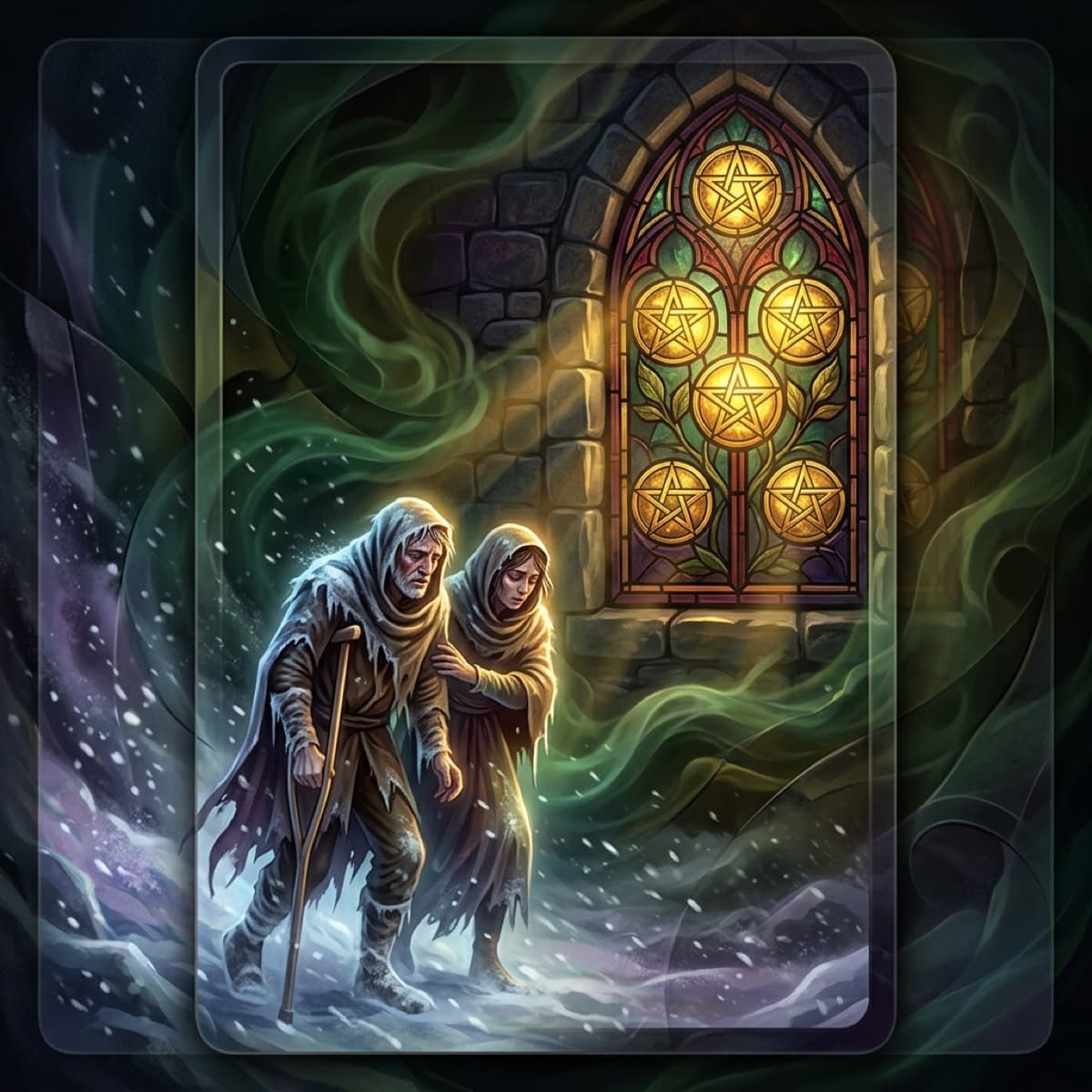
Key Insight
Tarot offers medical students a structured, symbolic framework for introspection, complementing clinical training by exploring psychological and emotional variables in patient care and personal well-being. It functions not as mystical fortune-telling but as a replicable system using 78 cards as variables within defined spreads to model situations, analyze patterns, and reveal unspoken narratives. This approach helps bridge the gap between objective medical science and the subjective human experience, fostering empathy, identifying burnout triggers, and clarifying personal biases—all through a lens that respects a scientific, diagnostic mindset.
Want your personalized reading?
Experience our AI divination system combining ancient wisdom with modern insights.
Executive Summary: Tarot is not a replacement for medical science but a structured framework for introspection. For skeptical medical students, it offers a replicable system to explore the psychological and emotional variables of patient care and personal burnout that textbooks often omit. Think of it as a diagnostic tool for the soul, not the body.
Why a Scientific Mind Can Benefit from Tarot
In my decade of guiding professionals, I've found medical students are some of my most insightful clients. Your skepticism is your greatest asset, not a barrier. You're trained to observe patterns, assess probabilities, and consider differential diagnoses. Tarot, when stripped of mysticism, operates on the same principles. It presents 78 variables (the cards) within a structured system (the spread) to model a situation. The "reading" is the analysis of how these symbolic variables interact. A recent client, a third-year resident drowning in burnout, wasn't seeking a cure but clarity. The cards didn't tell her to quit; the Two of Swords (indecision) next to Four of Wands (community) prompted her to analyze her isolation, leading her to join a peer support group—a measurable, positive outcome. This is less about fortune-telling and more about creating a framework for tracking personal insights versus outcomes.
| Clinical Diagnostic Mindset | Tarot Analytical Mindset |
|---|---|
| Gathers patient history (subjective) & lab data (objective). | Gathers question (subjective) & card imagery/symbols (objective data set). |
| Forms a differential diagnosis (list of possibilities). | Interprets card combinations (spectrum of potential outcomes/underlying factors). |
| Considers biopsychosocial model. | Examines situation through elemental lenses (Wands/energy, Cups/emotions, Swords/mind, Pentacles/body). |
| Develops a treatment plan. | Catalyzes a reflective action plan or perspective shift. |
Ready to explore this for yourself? Try a free tarot reading now and see what the universe reveals about your situation.
The Strategic Framework: Tarot as a Tool for Empathic Diagnostics
Try It Now — Free Reading
✦ Free · Private · Instant Results
The greatest challenge in medicine isn't just knowing the pathology; it's understanding the human experiencing it. My proprietary sessions with medical professionals focus on one gap: the unspoken emotional narrative. Tarot provides a neutral third party—the cards—to which you can project and then analyze those narratives. For the skeptic, start with this hypothesis: "If this system is merely a mirror, what does my interpretation reveal about my biases, fears, and blind spots?"
One ER doctor I worked with was struggling with detached efficiency. He drew the Queen of Cups (deep empathy) reversed. He initially dismissed it. Later, he realized it pinpointed his conscious suppression of empathy to function—a critical insight into his own coping mechanism. It was a data point for self-care.
This isn't so different from the frameworks used in evidence-based intuitive practices for other high-stakes professions. The goal is enhanced self-awareness, which directly translates to better patient rapport and personal resilience.
FAQ for the Skeptical Student
Does this conflict with my evidence-based training?
No. It complements it. You are the interpreter. The cards are inert cards. The value comes from the cognitive reframing and introspection they trigger, much like a structured psychological tool rather than cold reading.
How can I test this without "believing" in it?
Use the scientific method. Formulate a clear question. Conduct a reading (gather data). Record your interpretation (hypothesis). Track outcomes over time (results). Compare against your journal. The process itself is the intervention.
Can this help with board exams or diagnosing patients?
Absolutely not. Tarot is for navigating internal states—stress, motivation, emotional fatigue. It is for the healer, not the healing. For managing the immense pressure, not the pathophysiology. It's a tool for the person in the white coat, not for the coat itself.
Try It Now — Free Reading
✦ Free · Private · Instant Results